

The Hidden Costs of Deferred Maintenance: How a $500 Repair Can Become a $50,000 Project
July 15, 2026
Small Building Problems Rarely Stay Small
For many facility managers, property managers, and commercial building owners, it can be tempting to postpone a minor repair when budgets are tight and the issue doesn’t seem urgent. A small roof leak, a sticking door, or a drafty window may feel manageable today.
The reality is that deferred maintenance often transforms inexpensive repairs into costly restoration projects.
One of the most expensive building repairs is often the one that wasn’t addressed when the warning signs first appeared.
A Small Roof Leak Can Become a Major Restoration Project
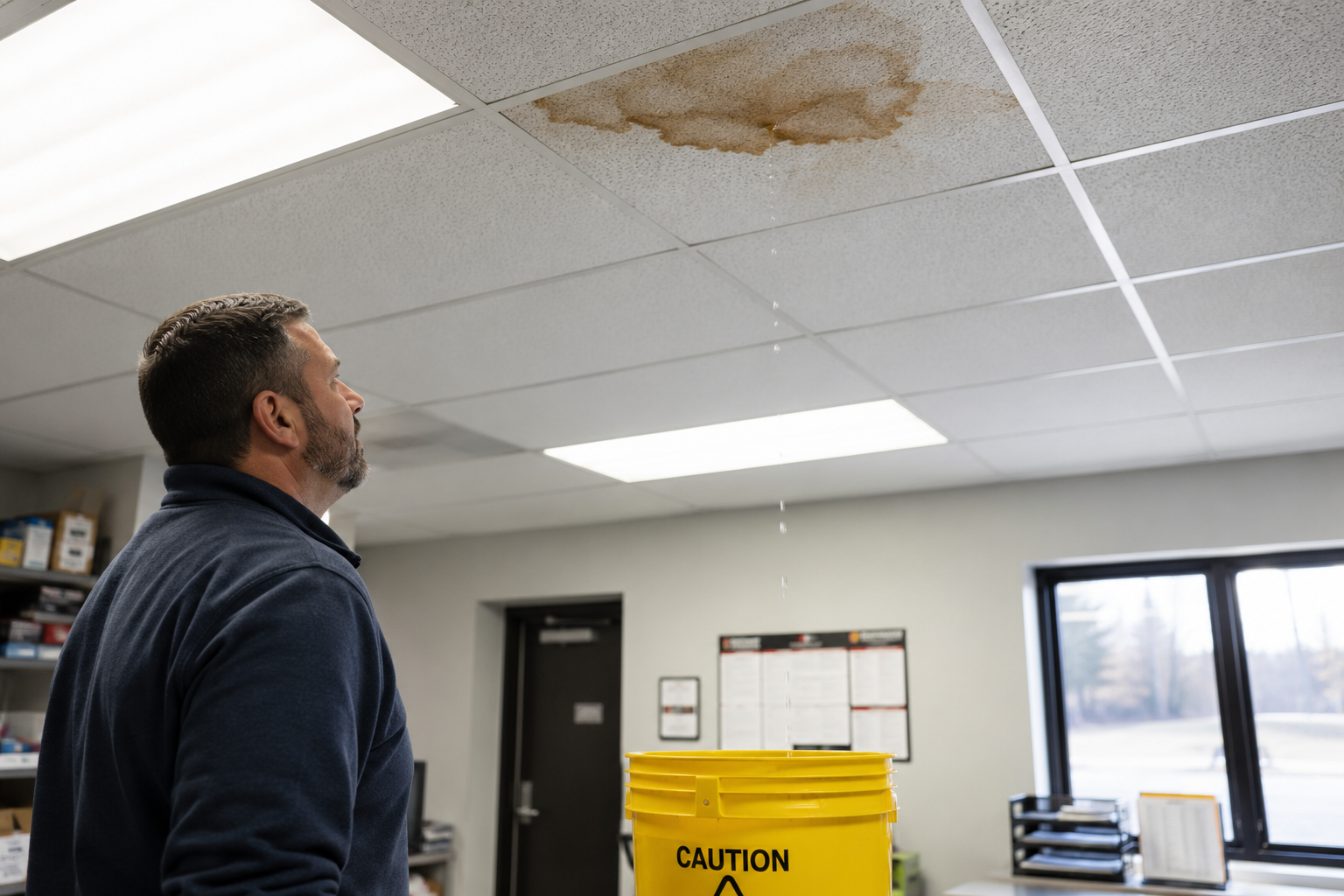
A minor commercial roof leak may only require a simple repair costing a few hundred dollars. However, when left unresolved, water can travel well beyond the original point of entry.
Over time, moisture can:
- Saturate insulation
- Damage the roof decking
- Stain ceilings and interior finishes
- Create mold and mildew conditions
- Damage flooring and equipment
- Compromise structural building components
What began as a simple roof repair can quickly become a project involving roofing replacement, drywall repairs, painting, flooring replacement, insulation replacement, and mold remediation—often costing tens of thousands of dollars.
Routine roof inspections and prompt repairs protect far more than the roof itself—they protect the entire building.
Windows and Doors: Small Issues Can Lead to Major Building Repairs
Windows and doors are among the most heavily used and weather-exposed components of any commercial building. Daily use, seasonal weather, UV exposure, and temperature fluctuations all contribute to normal wear over time.
Small issues such as failed sealant joints, worn weatherstripping, sticking doors, or deteriorating hardware can allow air and water to enter the building envelope.
Common warning signs include:
- Water infiltration around window and door frames
- Air leaks that increase heating and cooling costs
- Condensation or fogged insulated glass
- Worn hardware is affecting security and operation
- Rotting framing or deteriorated wall materials
- Doors and windows that no longer open or close properly
Addressing these issues early helps extend the life of your building envelope while avoiding expensive repairs to framing, insulation, drywall, flooring, and interior finishes.
The True Cost of Deferred Maintenance
Deferred maintenance creates a domino effect. One neglected repair often impacts multiple building systems, making repairs larger, more disruptive, and significantly more expensive.
Beyond repair costs, deferred maintenance can also lead to:
- Increased energy and utility costs
- Unexpected equipment downtime
- Business interruptions
- Occupant complaints
- Safety hazards
- Reduced building lifespan
- Higher long-term capital expenditures
What starts as a $500 repair can easily become a project costing tens of thousands of dollars.
Preventive Maintenance Saves Money
The most cost-effective maintenance strategy is identifying and repairing problems before they become emergencies.
Regular inspections of roofing systems, windows, doors, sealants, and other critical building components allow facility managers to prioritize repairs while they are still manageable and affordable.
Preventive maintenance not only reduces repair costs but also helps extend the life of commercial buildings, improve occupant comfort, reduce energy consumption, and minimize operational disruptions.
Protect Your Building Investment
At Munger Construction, we work with facility managers, property managers, and commercial building owners throughout Connecticut to evaluate existing building conditions, identify maintenance concerns, and develop practical repair strategies that protect long-term investments.
Whether it’s a roof leak, deteriorating sealants, damaged doors and windows, or other building envelope concerns, addressing problems early almost always costs less than waiting until they become emergencies.
A proactive repair today can prevent a major capital project tomorrow.
Recent News

How to Compare Construction Proposals: Why the Lowest Bid Might Not Tell the Whole Story
September 29, 2026
Construction Manager vs. General Contractor: What’s the Difference?
August 18, 2026
Commercial Construction Services Across Connecticut, Rhode Island, Massachusetts & New York
August 7, 2026
Top 5 Manufacturing Facility Upgrades That Improve Efficiency and Support Growth
July 23, 2026
Pre-Engineered Metal Buildings: The Smart Choice for Modern Commercial Construction in Connecticut
July 16, 2026
Munger Construction Named to Metal Construction News Top 100 Metal Builders List for 2026
May 5, 2026

Munger Construction and Industrial Building Systems Earn Four Honors in 2026 Varco Pruden Hall of Fame Awards
May 5, 2026